The immune system is one of the most complex defense networks in the human body. It involves different types of cells, tissues, organs, and signaling molecules that work together to help the body recognize and respond to potential threats.
Its normal functioning is influenced by many factors, from nutrition, sleep, and physical activity to stress, lifestyle habits, and overall health.
In recent years, researchers have also turned their attention to astaxanthin, a natural red carotenoid found in particularly high concentrations in the microalga Haematococcus pluvialis.
But what does a pigment from microalgae have to do with the immune system?
Oxidative Stress and Immune Cells
Astaxanthin is best known for its antioxidant properties. This is also relevant to the immune system, as immune cells are sensitive to oxidative stress.
Reactive oxygen species are naturally produced in our bodies and play important physiological roles. Problems arise when the balance between their production and the body’s ability to regulate them is disrupted.
This is why researchers are interested not only in astaxanthin’s antioxidant activity itself, but also in whether supplementation can influence certain markers of immune response.
What Have Human Studies Shown?
One important clinical study was published in 2010. In a randomized, double-blind, placebo-controlled trial, 42 healthy young women received 0, 2, or 8 mg of astaxanthin daily for eight weeks.
Researchers monitored a range of parameters associated with oxidative stress, inflammation, and immune response.
The groups receiving astaxanthin showed changes in certain markers of immune response, including natural killer (NK) cell activity and specific populations of T and B cells. However, the authors emphasized that the study involved a small and highly specific population, meaning its findings should not automatically be generalized to everyone.

In other words, this is not proof that astaxanthin “prevents infections” or “boosts immunity” in every situation. It does, however, help explain why its relationship with immune function has become an interesting area for further research.
What About 4 mg Daily?
A particularly interesting study involved 40 trained young soccer players.
In this randomized, double-blind study, one group received 4 mg of astaxanthin daily for 90 days, while the other received a placebo.
After 90 days, the astaxanthin group showed an increase in resting levels of secretory immunoglobulin A (sIgA), along with changes in certain markers of oxidative balance.
Why Is IgA Important?
Immunoglobulin A, or IgA, is an important component of the immune defenses of mucous membranes.
It is found, among other places, in secretions lining the respiratory and digestive tracts, where it forms part of the body’s first line of defense against the external environment.
For this reason, salivary IgA is frequently monitored in studies involving physically active individuals. Intense and prolonged physical activity can temporarily affect certain immune parameters, making the relationship between training, recovery, and immune response particularly interesting in sports science.
However, it is important to interpret these findings correctly: an increase in a particular immune marker is not the same as proof that a supplement prevents colds, influenza, or any other illness.
Astaxanthin and Immunity: An Ongoing Area of Research
Today, considerably more research on astaxanthin is available than just a few decades ago. However, when it comes specifically to the immune system, the clinical evidence is still developing.
Recent studies continue to investigate its relationship with oxidative stress, inflammatory processes, and various aspects of immune response. One more recent study involving physically active individuals, for example, found changes in several proteins associated with immune function following intense exercise, but did not demonstrate improvements in all measured recovery and inflammation parameters.
Why Does Alga Vita Choose Natural Astaxanthin?
Not all sources of astaxanthin are the same.
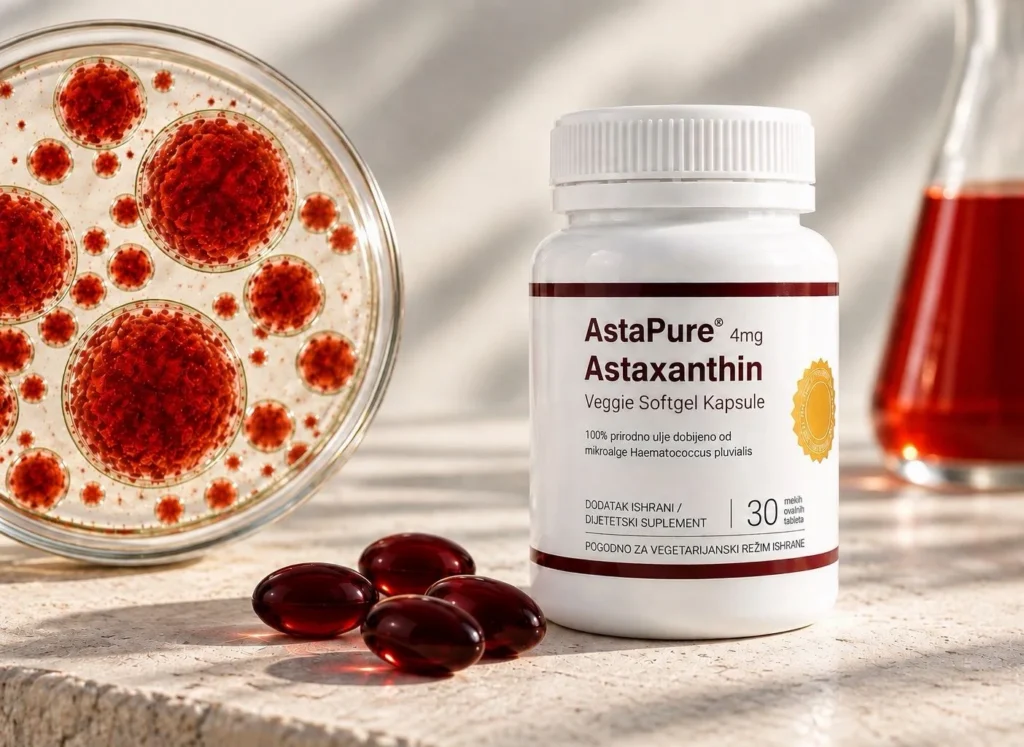
The AstaPure® ingredient used by Alga Vita is derived from the microalga Haematococcus pluvialis, one of the richest natural sources of astaxanthin.
Each AstaPure® Astaxanthin veggie softgel capsule contains 4 mg of natural astaxanthin.
Interestingly, the same daily dose of 4 mg was used in the clinical study involving soccer players mentioned above, which examined salivary IgA, oxidative balance, and other physiological parameters.
This does not mean that the study was conducted using Alga Vita’s AstaPure® product, nor that its findings can automatically be attributed to our product. Rather, it demonstrates that a 4 mg dose of astaxanthin has been investigated in a published human clinical study.
And this reflects the approach we aim to uphold at Alga Vita: natural ingredient sourcing, controlled quality, and communication grounded in what scientific research actually shows.
Life Begins with Algae.